
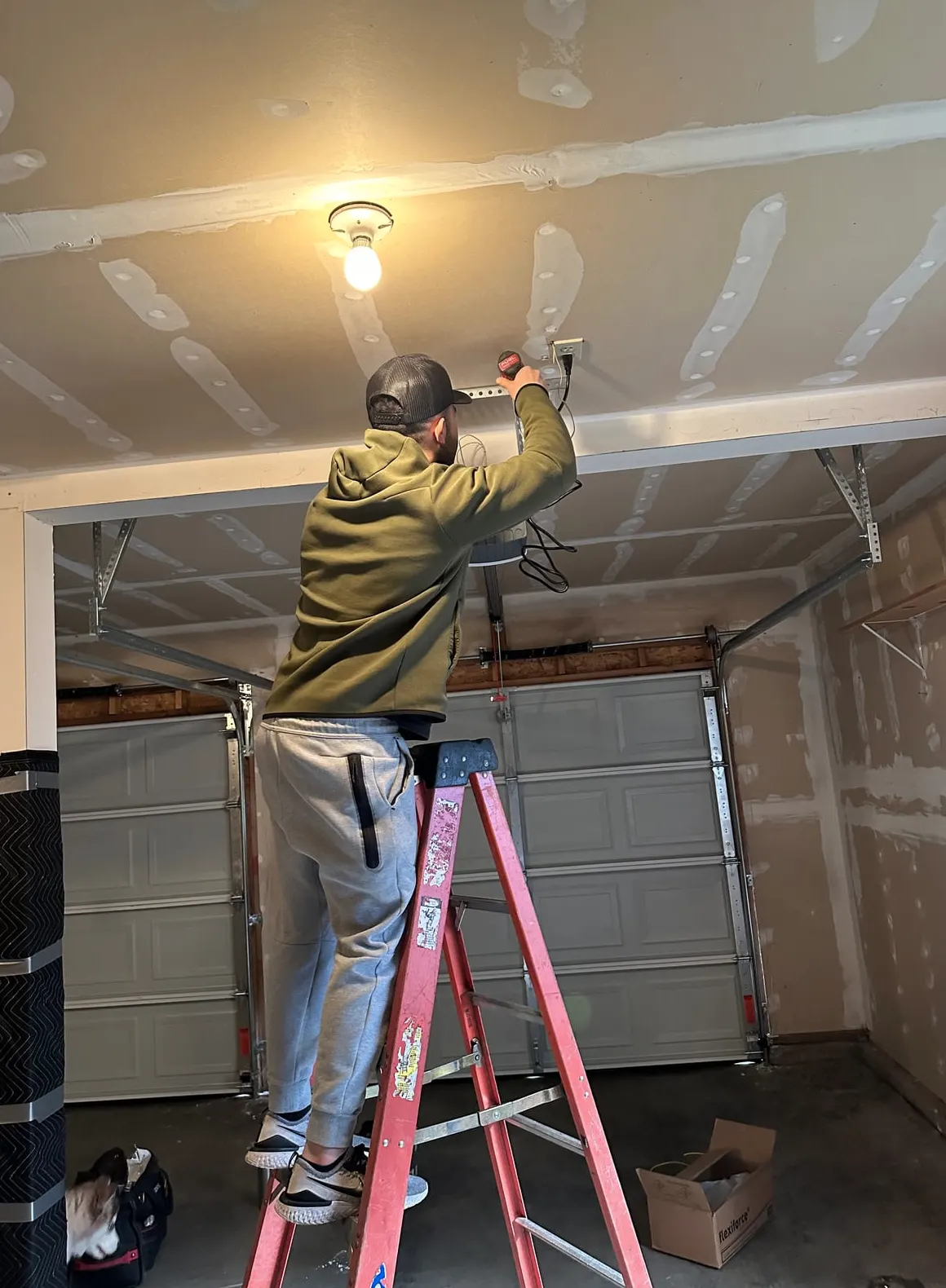
The Mistake Most People Make First
When the remote stops working, the instinct is to assume the opener itself has died and start shopping for a replacement unit. It's an understandable jump — the opener is the most visible, most expensive-looking part of the system, and "the motor burned out" feels like a satisfying explanation. But a dead opener is actually one of the least common reasons a garage door stops responding. Most of the time the real problem is cheaper, smaller, and easier to fix — a drained battery, a dirty sensor lens, a tripped outlet. Replacing the whole unit before checking those things usually means spending money you didn't need to spend.
What "Ignoring the Remote" Actually Looks Like
Before you start troubleshooting, pin down exactly what's happening, because the symptom points toward the cause:
- Nothing happens at all — no light, no click, no hum — when you press the remote or the wall button.
- The wall button works but the remote doesn't, or vice versa.
- You hear a click or hum from the motor unit, but the door doesn't move.
- The opener's light blinks a set number of times when you press the button, instead of running normally.
- It worked yesterday and today it's completely unresponsive, with no obvious trigger.
Each of these narrows down where to look first.
Causes, Checked in the Order a Technician Would Check Them
1. Power to the Unit
If nothing happens at all — no light, no sound — the opener may simply have no power. Garage outlets are frequently wired to a GFCI circuit, and humidity or a minor power surge can trip it without you noticing. Check the outlet, check the breaker panel, and confirm the opener is plugged in securely. This takes two minutes and solves more "dead opener" calls than any other single fix.
2. Batteries and the Remote Itself
Next, rule out the remote. Swap in a fresh battery, and if you have a second remote or the wall button, test whether that one works instead. A remote that's been sitting in a hot truck console or a humid garage can corrode its battery contacts faster than you'd expect in this climate. If the wall button works fine but the remote doesn't, the fix is usually as simple as a new battery or, if the remote itself is damaged, reprogramming a replacement to the opener.
3. Safety Sensors (Photo Eyes)
If the opener clicks or hums but the door won't move, or if the light blinks a specific number of times, the photo-eye sensors near the bottom of the tracks are the next stop. These two small sensors must have a clear, aligned line of sight to each other. A bump from a bike, a stored box, or even a spider web can knock them out of alignment or block the beam. In this part of Florida, afternoon condensation and dust kicked up by humid air can also film over the lenses. The fix is usually just wiping the lenses clean and nudging the brackets until both indicator lights glow steady instead of flickering.
4. Antenna and Interference
If the remote works intermittently or only when you're standing close to the door, the antenna on the motor unit may be bent, tucked up out of the way, or just worn out. LED garage bulbs, nearby electronics, or even a weak remote signal can also interfere. Letting the antenna hang freely and testing with a fresh remote usually confirms whether this is the issue.
5. Limit Switch Settings
If the door starts to move but reverses or stops partway, the limit switches that tell the opener where the door should start and stop may have slipped out of adjustment. This happens more often than people expect in houses where wood or composite doors swell slightly with humidity change through the seasons — the door's resting position shifts just enough to confuse the opener's programmed limits. Resetting the limits is a straightforward adjustment, but if it keeps happening, it's worth having a technician check whether the door itself is binding.
6. The Logic Board
If power is confirmed, the remote and wall button both fail, and the sensors are clean and aligned, the circuit board inside the opener housing may have failed. Moisture is the usual culprit here — openers installed in garages that take on humidity or, closer to the coast, salty air, can develop corrosion on the board's contacts over time. A corroded board sometimes works sporadically before failing completely, which explains why some homeowners report the opener "worked fine last week." Board replacement is possible on some models, but on older units it's often more cost-effective to replace the opener.
7. Motor and Drive Mechanism
Last on the checklist, because it's the least common cause, is an actual motor or gear failure. A stripped drive gear, a failed capacitor, or a worn-out motor will usually show up as a persistent humming sound with no movement, even after everything above checks out. This is the point where replacement genuinely is the right call.
When to Call Chipley Garage Door Experts
If you've checked the outlet, swapped the battery, and wiped down the sensors and the opener still won't respond, it's time to bring in a technician rather than start disassembling the unit. Our team handles both Garage Door Opener Installation for units that have reached the end of the line and Garage Door Maintenance & Tune-Up visits that catch corrosion, misalignment, and worn components before they leave you stuck outside your own garage. We'll diagnose the actual cause instead of guessing, and we carry openers built to handle the humidity and storm conditions common in this part of Florida.
If your garage door opener in Chipley, Bonifay, Graceville, or anywhere else in Washington County has stopped listening to the remote or wall button, give Chipley Garage Door Experts a call. We'll get it diagnosed and working again, the right way, the first time.